
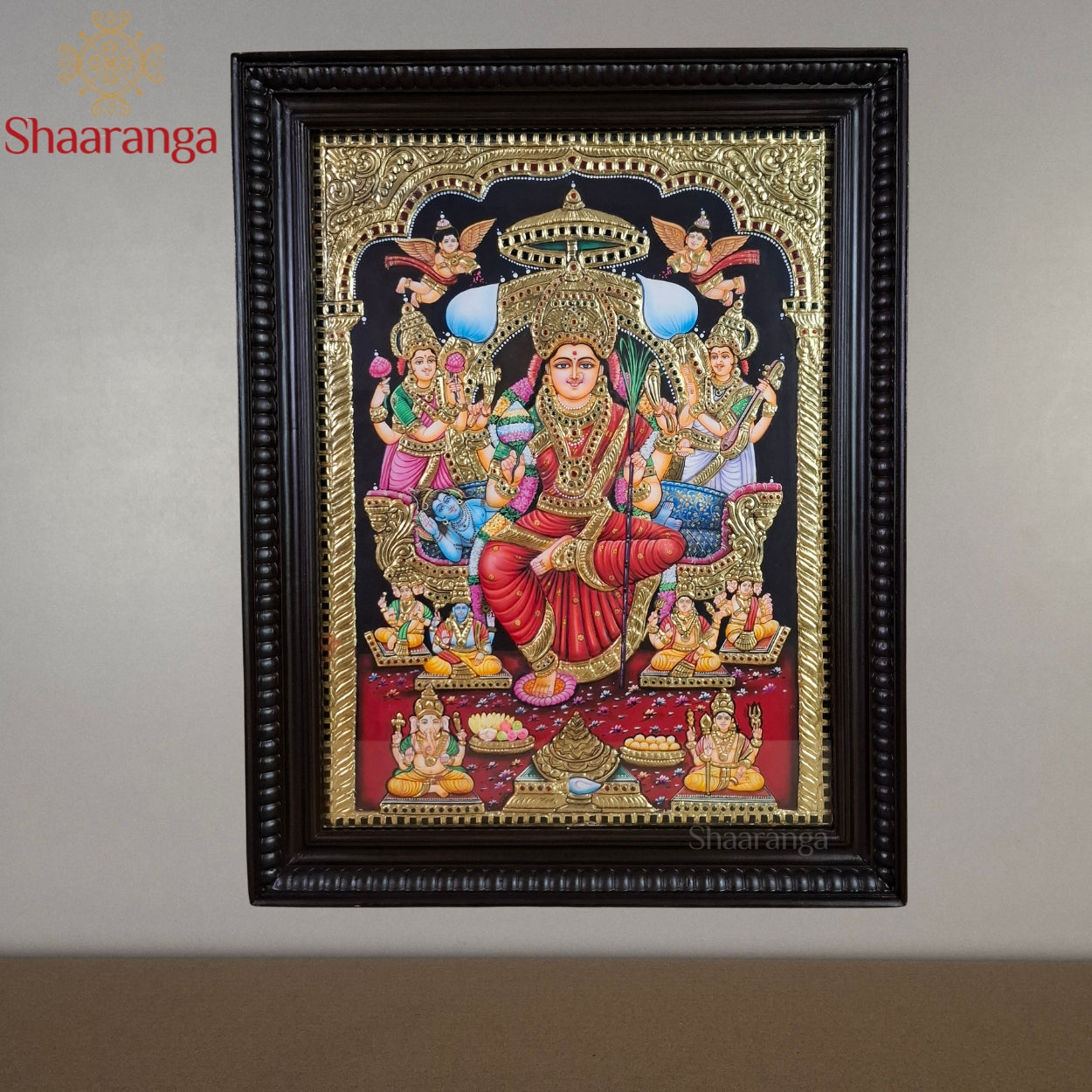


Architects & Interior Designers: Can They Become the New Custodians of Indian Craft?
In the first article of this series, we spoke about the Relevance Crisis facing Indian handicrafts.
In the second, we examined the Artisan Succession Crisis—and the uncomfortable possibility that extraordinary skills passed down over generations may disappear simply because the next generation sees little economic or aspirational reason to continue.
But these two challenges lead us to another important question:
Who can help bring Indian crafts back into contemporary life?
The answer may lie, to a significant extent, with a community whose influence over the way modern India lives has never been greater:
Architects and Interior Designers.
They Don't Just Design Spaces. They Influence Lifestyles.
A generation ago, many decisions about a home were made by the family building it.
Today, particularly in premium residences, villas, offices, hotels and institutional spaces, architects and interior designers influence almost every visual decision.
They determine materials.
They influence furniture.
They select lighting.
They recommend art.
They decide textures, colours and spatial character.
In doing so, they don't merely design spaces.
They influence what society considers contemporary, sophisticated and desirable.
That gives the design community an extraordinary opportunity to influence the future of Indian craftsmanship.
The Missing Conversation
India possesses thousands of extraordinary craft traditions.
Woodcarving. Stone carving. Bronze casting. Metalwork. Tanjore painting. Handwoven textiles. Traditional furniture. Architectural carving. Pottery. Inlay. Filigree. Tribal art—and hundreds more.
At the same time, India is witnessing unprecedented growth in contemporary architecture and interior design.
Yet these two worlds do not interact as much as they could.
An architect may be designing a ₹10 crore residence only a few hundred kilometers from a craft cluster possessing centuries of artistic knowledge.
But the two may never meet.
The result is an extraordinary paradox:
We have world-class craftsmanship.
We have world-class designers.
But we have not sufficiently connected the two.
This disconnect becomes even more striking when we look back at India’s own architectural heritage. Monumental works such as the Kailasa Temple at Ellora, the Meenakshi Temple in Madurai, and countless other temple complexes across the country stand today as living evidence of what becomes possible when architects, engineers, and master artisans work not in isolation, but as a deeply integrated ecosystem. These were not merely structures—they were collaborative achievements where design vision, structural ingenuity, and artisanal mastery came together seamlessly. The fact that many of these spaces have endured for hundreds, in some cases over a thousand years, is itself a testimony to the power of such collaboration.
Craft Should Not Be an Afterthought
Too often, handicrafts enter a project at the very end.
The architecture is completed.
The furniture is installed.
The lighting is finished.
And then someone asks:
"What artwork should we put on this wall?"
By then, craft has been reduced to decoration.
Imagine instead if craftsmanship entered the conversation at the design stage itself.
A carved wooden partition designed specifically for a contemporary villa.
A traditional stone-carving technique interpreted as an architectural feature.
A handcrafted pooja space integrated into the architecture rather than purchased later as an independent object.
A bronze sculpture conceived as the focal point of a modern courtyard.
A traditional painting commissioned specifically for the proportions and visual language of a contemporary interior.
A centuries-old craft suddenly becomes part of twenty-first-century architecture.
That is where preservation becomes relevance.
Traditional Does Not Mean Old-Fashioned
Perhaps one of the biggest misconceptions surrounding Indian crafts is that traditional automatically means ornate, heavy or unsuitable for contemporary interiors.
It need not.
The craft is a skill.
The final product is an application of that skill.
A master woodcarver capable of creating an elaborate traditional panel can also create a restrained contemporary panel.
A stone sculptor working with centuries-old techniques can collaborate with an architect on a modern installation.
A traditional metal artisan can work with a product designer to create contemporary lighting, furniture or architectural elements.
The objective should never be to dilute the craft merely to make it fashionable.
Rather:
Preserve the skill.
Respect the tradition.
Reimagine the application.
Designers Need Artisans. Artisans Need Designers.
An artisan may possess extraordinary knowledge of material, technique and tradition.
But he may not always know how a contemporary apartment is being designed in Mumbai, Hyderabad, Bengaluru, Dubai or New York.
A young designer understands changing lifestyles, spatial constraints, contemporary aesthetics and emerging consumer preferences.
But that designer may never have spent a week beside a master craftsman who has understood wood, stone or metal for forty years.
Bring them together.
Something remarkable can happen.
The artisan brings:
Skill + Material Intelligence + Tradition + Experience
The designer brings:
Function + Contemporary Aesthetics + Lifestyle Understanding + New Applications
Together they create:
Tradition + Relevance + Market
And that can ultimately create something even more important:
Livelihood + Continuity + Succession
We Need to Take Designers to the Craft Clusters
Perhaps the relationship needs to begin much earlier.
Students from our premier architecture and design institutions should spend meaningful time in India's craft clusters.
Not merely on observational study tours.
They should work with artisans.
Sit beside them.
Understand their tools.
Understand the limitations of materials.
Develop prototypes together.
And equally importantly, master artisans should be invited into design institutions as knowledge holders and teachers, not merely as demonstrators of traditional techniques.
There is something fundamentally wrong if a student can graduate in Indian design without meaningful exposure to the extraordinary material knowledge that exists within India's own artisan communities.
This Is Also About Livelihoods
The argument is not merely cultural.
It is economic.
When architects and designers incorporate craftsmanship into projects, they create something artisans desperately require:
meaningful demand.
Not charity.
Not subsidy.
Not sympathy.
Demand.
A craft survives when someone wants what the artisan creates and is willing to pay fairly for it.
And when demand becomes consistent, something else happens.
Income improves.
Confidence improves.
Investment in tools improves.
Apprentices return.
And perhaps the artisan's son or daughter begins to see the family craft differently.
This brings us directly back to the succession crisis discussed in the previous article.
Relevance creates demand.
Demand creates livelihood.
Livelihood creates dignity.
Dignity encourages succession.
But Industry Must Meet Designers Halfway
The responsibility cannot rest entirely with architects and designers.
Those of us working between artisans and consumers must also make collaboration easier.
Designers need dependable execution.
Clear specifications.
Quality consistency.
Realistic timelines.
Material knowledge.
Customization capabilities.
Communication.
And artisans often require someone who can translate a designer's concept into production realities.
This intermediary role can be enormously valuable when performed responsibly.
What We Have Learnt at Shaaranga
More than three decades of working closely with artisans and customers has repeatedly shown us that extraordinary craftsmanship alone does not guarantee market relevance.
Sometimes a relatively small design intervention can completely change the possibilities for a craft.
A change in dimensions.
A different application.
Better functionality.
A contemporary context.
Or simply understanding where and how the customer intends to use the piece.
At Shaaranga, we have increasingly tried to facilitate this dialogue—sharing market feedback and design inputs with artisans, helping traditional craftsmanship adapt to changing lifestyles without compromising its identity, and attempting to connect craftspeople with designers who can help discover entirely new applications for their skills.
We are also exploring greater interaction between artisans and designers emerging from premier institutions because the future may not lie in asking either side to change completely.
It may lie in getting them to speak to each other.
What Can Be Done?
If we genuinely want architects and designers to become partners in craft revival, some practical changes can help.
Design institutions can embed meaningful craft-cluster engagement into their curriculum.
Architects and interior designers can consider craft at the concept stage rather than as a finishing accessory.
Artisans can be encouraged to participate in collaborative product development while retaining the integrity of their skills.
Craft organisations and market intermediaries can create reliable bridges between designers and artisan clusters.
Government and industry bodies can support residencies, collaborative workshops, prototypes and commissions rather than limiting interventions to exhibitions alone.
And consumers can begin asking their designers a very simple question:
“Where is the Indian craftsmanship in my home?”
That one question could create extraordinary change.
From Preservation to Participation
We often speak about preserving India's craft heritage.
But preservation cannot mean keeping beautiful objects behind glass.
Nor can it mean expecting artisans to continue producing exactly what their forefathers produced, irrespective of whether contemporary society needs it.
Living heritage must continue to live.
In our homes.
Our offices.
Our hotels.
Our public spaces.
Our architecture.
And our everyday lives.
Architects and interior designers have the ability to make that happen at a scale few other professions can.
Perhaps we should therefore stop seeing them merely as specifiers of Indian crafts.
They can become some of their most important custodians.
Not custodians who preserve the past exactly as it was.
But custodians who help traditional knowledge discover its rightful place in the future.
And when a centuries-old skill finds expression in a home designed for tomorrow, something beautiful happens:
Tradition doesn't merely survive.
It becomes relevant again.
The Future of Indian Crafts – Part 3
Architects & Interior Designers: Can They Become the New Custodians of Indian Craft?
A Thought Leadership Series by
Shaaranga
Preserve the Skill. Reimagine the Application. Create the Future.
#IndianCrafts #IndianHandicrafts #Architecture #InteriorDesign #IndianDesign #CraftRevival #Artisans #Craftsmanship #IndianHeritage #DesignInnovation #SustainableDesign #Shaaranga